.webp&w=3840&q=75)
TLDR: Rhinoplasty recovery follows a predictable process that can be mapped week by week. The most visible swelling clears in the first two to four weeks. A socially presentable result arrives around week three or four. But the definitive result, with swelling fully resolved, can take up to twelve months to consolidate. Knowing this timeline before surgery is essential for having realistic expectations and avoiding unnecessary anxiety during recovery.
One of the most common mistakes I see in patients preparing for rhinoplasty is that they arrive at surgery without a clear map of what comes next. They know there will be swelling. They know there will be some discomfort. But they do not have a clear picture of when they will be able to go out, when they can return to work, or when they will see something that actually resembles a result.
That lack of information generates unnecessary anxiety during recovery. And anxiety, when swelling is at its peak and the nose looks nothing like what you expected, can lead to premature conclusions about the outcome.
What I am going to give you here is that map. Week by week, with the honesty of someone who has guided many patients through this process.
Days 1 to 3: the most intense phase for your nose
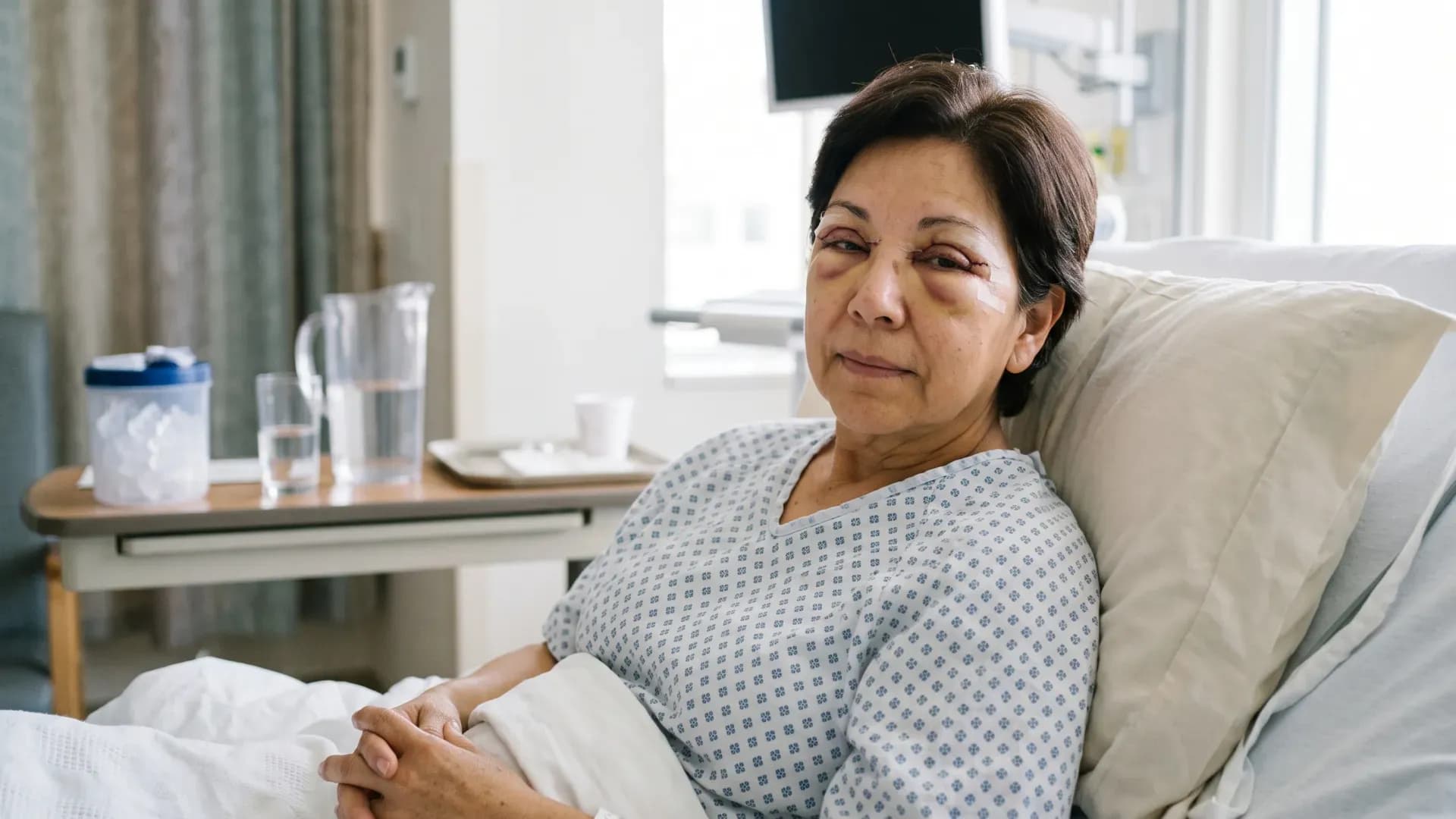
The first seventy-two hours after surgery are the most intense of the entire recovery. Swelling reaches its peak during this period. The eyelids, cheeks, and nasal area may be markedly swollen. Bruising around the eyes is common, looks more dramatic than it is, and resolves on its own within one to two weeks.
Nasal congestion is total. Breathing through the nose is not possible during these days, which forces mouth breathing and causes dryness and discomfort during sleep. Pain itself is usually manageable with the analgesics prescribed by the surgeon, but the constant sensation of pressure and heaviness in the nasal area is present throughout.
During these days the patient should be on complete rest, with the head elevated even while sleeping, to promote drainage and reduce swelling. Physical activity is completely contraindicated. Exposure to sun, heat, and dusty environments must be avoided.
Week 1: the first checkup and splint removal
Around day seven, the first postoperative checkup takes place. At that visit, the surgeon removes the external splint that protected the nose during the first week of healing. If there are external sutures, those are also removed at this appointment.
This is a moment patients anticipate with great emotion and sometimes with some disappointment. The nose that appears once the splint is removed is still very swollen. It does not look like the final result. Understanding this before arriving at that appointment is important so that the first image does not generate alarm.
At day seven the swelling is still significant, but the improvement compared to the first few days is already noticeable. Going out in public with the nose uncovered is possible, though most patients prefer to wait a few more days before appearing in social contexts.
Week 2: visible nose's improvement begins
During the second week, swelling begins to reduce perceptibly. Bruising around the eyes virtually disappears. Nasal congestion improves gradually, though breathing through the nose is still not fully normal. Most patients can resume sedentary activities such as desk work or remote work during this period.
The skin around the nose may appear somewhat tight or shiny due to residual swelling. This is normal and resolves with time. A feeling of numbness at the tip of the nose is usually present and may persist for several more weeks.
Week 3 and 4: the "socially presentable" result
Between week three and four, most patients reach what could be called a socially presentable point. The most visible swelling has reduced enough for the nose to have a recognizable shape, close to what the final result will be, though still with residual swelling.
This is when most patients can resume in-person work without the surgery being evident to people who were not aware of it. It is also the period when anxiety about the outcome tends to decrease, because the nose starts to look more defined.
The American Society of Plastic Surgeons describes this period as the point when most patients feel comfortable in their daily social and professional life, even though the healing process continues.
Month 2 and 3: the fine swelling
During the second and third months, swelling continues to reduce but at a slower pace. Week-to-week changes are less dramatic, but the nose keeps refining. The nasal tip, which is the area that takes the longest to fully deflate, may still appear somewhat round or less defined than it will ultimately be.
The most significant physical restrictions are progressively lifted during this period. Most surgeons authorize moderate physical activity around weeks four to six, and intense physical activity from month two or three depending on the individual case.
Sun exposure on the nose should remain careful during this period. Healing skin is more sensitive to pigmentation and exposure without protection can leave marks that take a long time to resolve.
To understand in detail what happens with swelling from month three onward and when you can expect to see the definitive result, you can read the article on the rhinoplasty swelling timeline, which covers that phase with the same level of precision.
According to the Mayo Clinic, the complete rhinoplasty recovery process, until swelling fully resolves and the final result is stable, can take up to one year in most patients and up to eighteen months in cases of thicker skin.
Through KURBUO, you can connect with rhinoplasty specialists who can guide you on the recovery process specific to your case, before making any decision about surgery. That initial conversation gives you the complete map of what lies ahead.