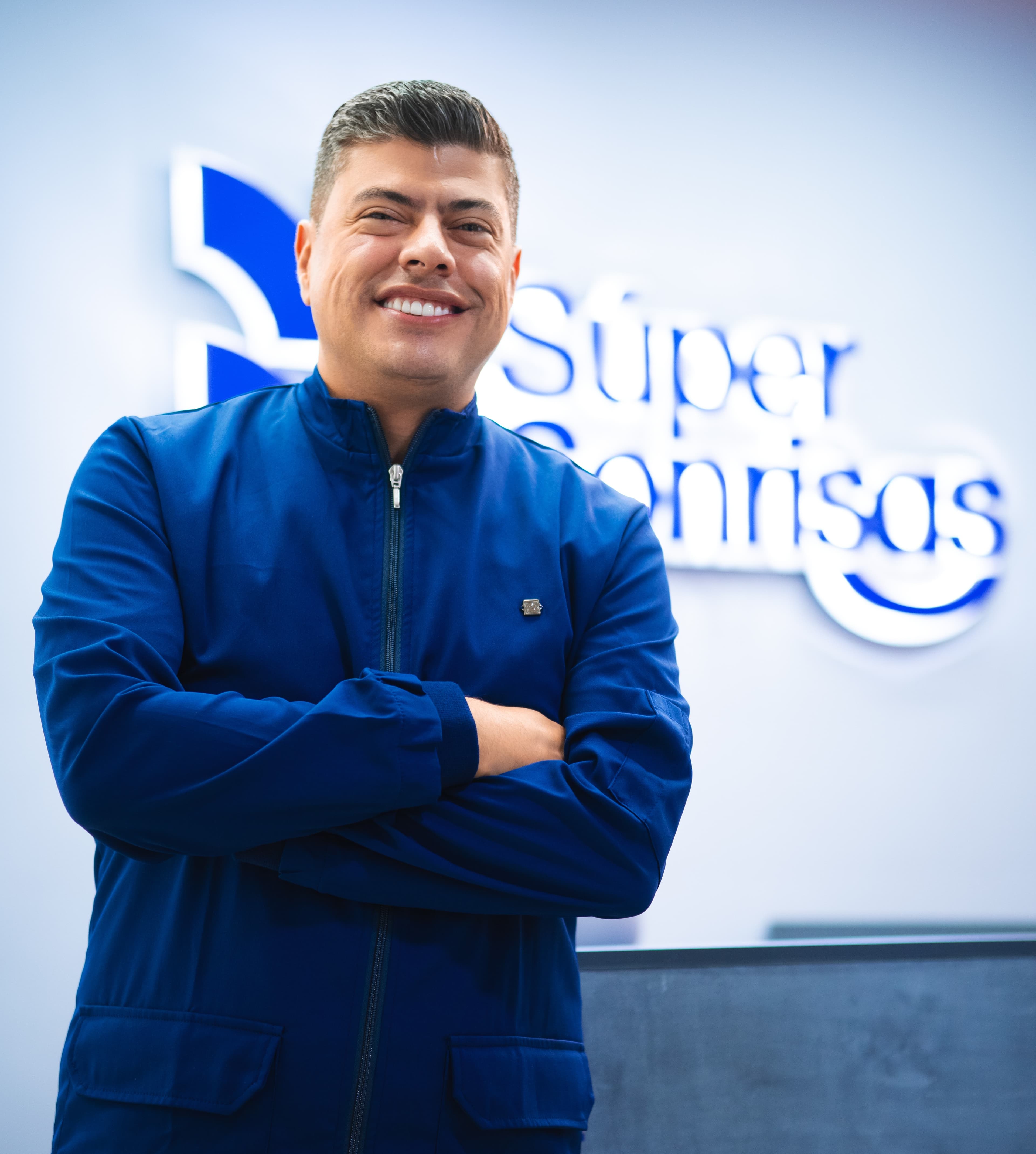
Julio Cesar BenitezDentistry
More details
.jpeg&w=3840&q=75)
.jpeg&w=3840&q=75)
1 / 4
21+
Years of experience
4300+
Patients attended
4200+
Satisfied patients
Dr. Julio César Benítez is a dentist with 21 years of experience in dental aesthetics, orthodontics, implantology, and oral rehabilitation, with an office in Medellín, Colombia — a world reference destination for high-quality, low-cost dental tourism. He graduated from the University of Antioquia, is a Specialist in Orthodontics from the Universidad Cooperativa de Colombia, and is a Certified Oral Implantologist by Universidade Cidade de São Paulo (2025). His practice integrates smile design, dental whitening, aesthetic aligners, dental implants, and complete oral rehabilitation, all under the highest clinical standards. As a verified KURBUO specialist, he treats patients from the United States, Canada, and the Caribbean who are seeking international-level dental treatments for a fraction of the price in North America.
Dr. Benítez bases his practice on honest, ethical, and minimally invasive dentistry, convinced that each patient deserves to be heard and understood before receiving any treatment. His philosophy is comprehensive care: not only does he address immediate problems, but he also builds long-term oral health, combining function, aesthetics, and biocompatibility in every clinical plan. For international patients who arrive from the United States, Canada, or the Caribbean seeking dental tourism in Colombia, he offers clear communication at every stage of the process, actively involving the patient in decisions. He believes in evidence-based dentistry that prioritizes the preservation of the natural tooth and the long-lasting harmony of the smile, without compromising quality or professional ethics.
Dr. Benítez works with an interdisciplinary and sequential approach that integrates four specialties into a single personalized plan: dental whitening (from $150 USD), aesthetic orthodontics with aligners (from $1,000 USD), dental implants (from $525 USD), and complete oral rehabilitation. Each case begins with a comprehensive diagnostic evaluation — functional and aesthetic — from which he designs an ordered treatment plan that harmonizes tooth position, replacement of missing teeth, and visual improvement of the smile. He uses modern technology and minimally invasive techniques to achieve natural, stable, and long-lasting results. For patients from the United States, Canada, and the Caribbean who visit Medellín, Colombia, he offers a pre-travel teleconsultation to plan the treatment before traveling, optimizing each day of stay with maximum clinical efficiency.
Media
In-Person
Close and professional care
Schedule your appointment at the office for a complete evaluation.
Video Consultation
Secure care from home
Talk to the doctor from home securely.
Chat
Direct medical response
Resolve quick questions with the medical team.
Frequently asked questions
What is the most requested procedure in your practice?
In my practice, the most requested procedures depend a lot on each patient’s needs and aesthetic expectations, but if I had to highlight one, I would say that the placement of dental veneers is one of the most in-demand. Many people come looking to improve the appearance of their smile quickly and effectively, and veneers allow us to achieve very natural and personalized results.
What makes you different from other doctors in your specialty?
What sets me apart from other professionals in my specialty is the comprehensive approach I apply in each case. I don’t just see teeth; I see people with unique stories, expectations, and needs. I combine cosmetic dentistry, orthodontics, and implantology to provide complete, personalized treatments, taking care of both the function and the aesthetics of the smile.
What is the estimated recovery time for your most common treatments?
Recovery time varies depending on the type of treatment. Regarding dental implant placement, the initial postoperative period usually lasts between 3 and 7 days, during which there may be swelling or mild discomfort. Implant integration into the bone (osseointegration) takes between 3 and 6 months, but during that time the patient can wear a provisional prosthesis and continue with normal daily life.