The treatment of acne sequelae is one of the most complex and misunderstood challenges in the field of dermatology and aesthetic medicine. Often, patients and professionals alike fall into the trap of seeking "magic formulas" or applying advanced technologies without prior analysis, resulting in frustrating outcomes or even unwanted complications.
Why Creams and Home Remedies Do Not Resolve Acne Scars
There is a popular belief that an expensive cream or a homemade mask can "erase" the marks left by acne. However, from a histological and anatomical perspective of the skin, this is virtually impossible.
What a Cream or Home Remedy Can and Cannot Achieve
What they can achieve: Dermocosmetic creams formulated with retinoids, hydroxy acids, or antioxidants can improve surface texture, provide hydration, regulate oil production, and fade post-inflammatory hyperpigmentation (those red or dark spots left behind after an active lesion).
What they cannot achieve: True acne scars involve a loss or structural alteration of collagen in the deep dermis, and in many cases, the presence of tethered fibrous bands pulling the skin downward. Consequently, no topically applied product or home remedy possesses the capacity or penetration depth required to remodel deep collagen or break fibrous bands.
The Risk of Improvising Without a Diagnosis
Applying abrasive home remedies such as lemon, baking soda, or unformulated oils, as well as self-medicating with acids in inappropriate concentrations, is not only ineffective but extremely dangerous. Improvising without a professional diagnosis can lead to chemical burns, contact dermatitis, hyperpigmentation, and, in the worst-case scenario, irreversible worsening of pre-existing scars.
Types of Acne Scars: Why Diagnosis Changes the Treatment
Not all acne scars are created equal, nor should the skin be treated as if it had only a single type of lesion—this approach is the primary cause of therapeutic failure. An accurate diagnosis allows the classification of the lesion and determines the required depth and mechanism of action.
Atrophic Scars: Boxcar, Ice Pick, and Rolling Scars
Atrophic scars are characterized by a loss of tissue:
- Ice Pick: These are narrow (less than 2 mm), deep depressions with well-defined borders that extend vertically into the dermis or subcutaneous tissue. They require targeted stimulation or deep ablation techniques.
- Boxcar: Round or oval depressions with well-demarcated vertical edges, similar to chickenpox scars. They can be superficial or deep.
- Rolling: Caused by subdermal fibrous bands that anchor the epidermis to deeper structures, creating a "wavy" or uneven appearance on the skin. Addressing them requires releasing that traction (such as through subcision) combined with collagen induction.
Hypertrophic and Keloid Scars
Unlike atrophic scars, these occur due to an excessive and disorganized production of collagen during the healing process. They present as raised, firm lesions (commonly on the jawline, chest, and back). Their management requires a completely different approach, ranging from intralesional corticosteroids and silicone sheets to vascular or gentle remodeling therapies, where aggressive procedures could worsen the condition.
What Is Best for Removing Acne Scars: Clinical Criteria, Not Improvisation
Why There Is No Single "Best Treatment" for Every Case
A universal "miracle treatment" does not exist in dermatology, as different types of scars often coexist in the same patient (for example, ice pick scars on the cheeks and rolling scars in the temporal area). Attempting to treat all scars with the same device or settings is an act of improvisation. Thus, true success lies in personalization—designing combined, sequential protocols tailored to the anatomy, skin phototype, and expectations of each individual.
The Backing of Clinical Experience and Academic Endorsement of Dr. Aura Ruiz
Treating skin safely demands an exhaustive understanding of cutaneous anatomy, histology, and physics applied to medical technology. Backed by a solid clinical trajectory and continuous university endorsement in specialized medical education, Dr. Aura Ruiz has developed a rigorous, evidence-based method. Nevertheless, her approach always prioritizes comprehensive patient evaluation and technical mastery to guarantee real, safe results.
Technology with Technique: Fractional CO2 Laser and Morpheus8 in Expert Hands
When Each Technology Is Used According to Scar Type
For comprehensive skin treatment and the management of atrophic or irregular scars, the strategic combination of Fractional CO2 Laser and fractional radiofrequency (Morpheus8) offers a complementary approach across different skin depths.
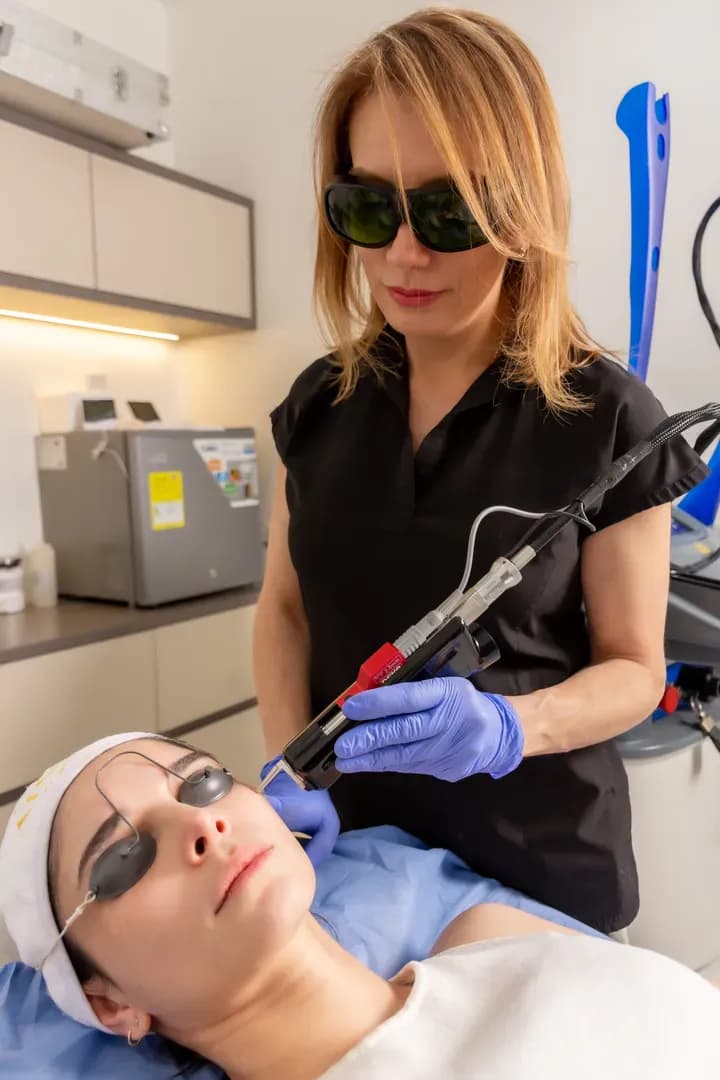
On one hand, the Fractional CO2 Laser stands as the gold standard for superficial and medium ablation, working by creating thermal vaporization channels that stimulate epidermal and dermal regeneration—ideal for smoothing texture and softening the visible edges of scars. On the other hand, Morpheus8 delivers intradermal fractional radiofrequency via coated microneedling to deliver energy into the deep levels of the dermis and subcutaneous tissue without damaging the superficial epidermal layer. In this sense, its action promotes powerful subdermal collagen remodeling and optimal skin tightening, making it the ideal solution for treating rolling and deep atrophic scars across various skin phototypes.
Why Combining Technology and Technique Yields Real Results
A radical change occurs when different modalities are integrated synergistically: using Morpheus8 to tighten and remodel deep structures alongside the CO2 Laser to polish the skin's surface—combined when necessary with subcision or biostimulators—allows the problem to be addressed from the deep layers to the surface within a single therapeutic plan.
Techniques Combined in Consultation
The execution of structured procedures integrates, according to case needs, subcision to release fibrous bands, radiofrequency with microneedling to stimulate deep layers, and ablative laser to polish surface texture.
Specialized Consultation and Evaluation with Dr. Aura Ruiz
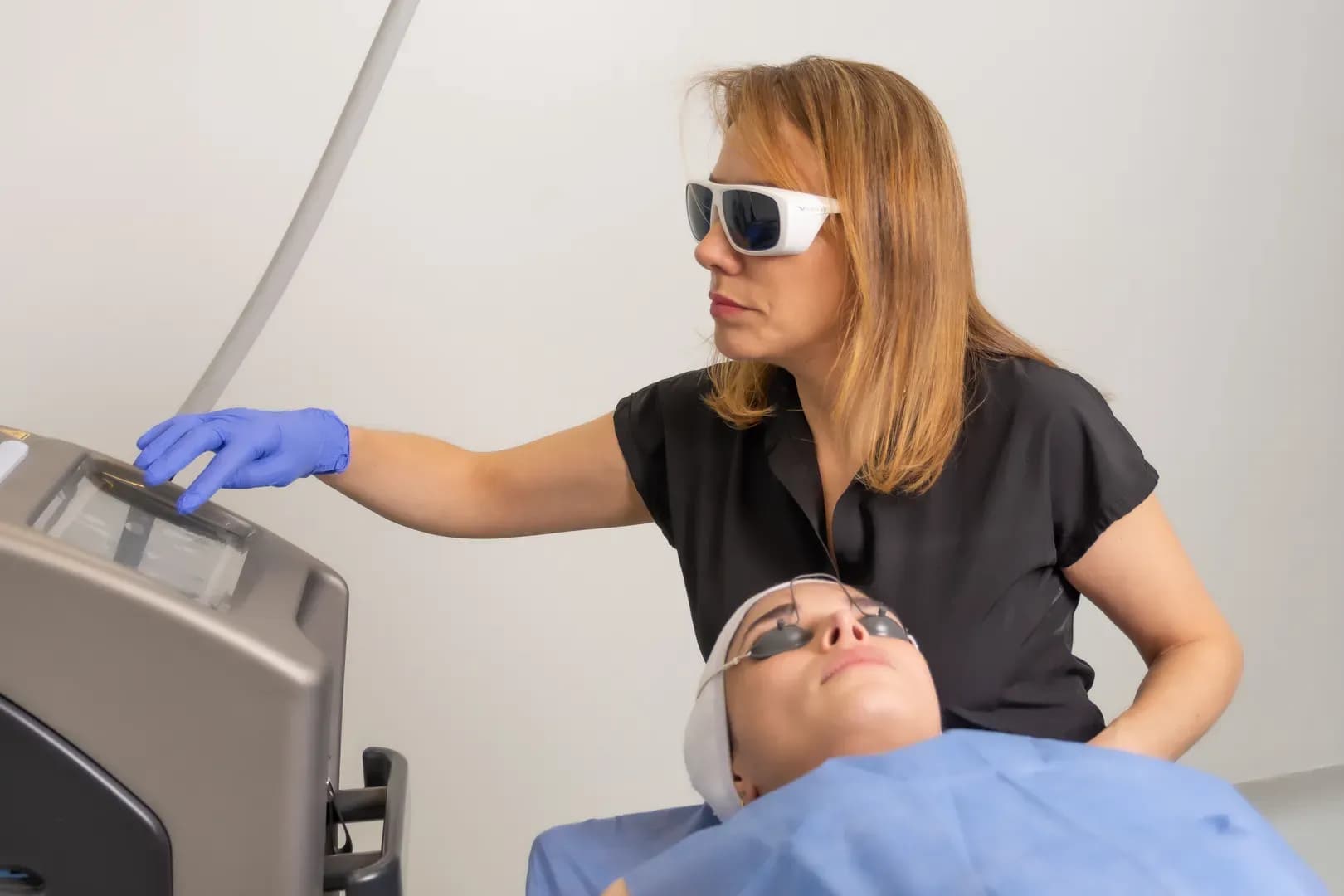
Do not leave the health or appearance of your skin to chance or improvisation. A specialized medical evaluation is the first step toward designing a safe, personalized, and effective treatment plan.
Personalized and Priority Attention
Every treatment plan is individually designed under rigorous medical quality standards. Reserve your appointment in advance and take the next step toward restored skin guided by true clinical criteria.
Frequently Asked Questions
Is it also possible to remove tattoos? Yes, Dr. Aura Ruiz is a specialist in tattoo removal without scarring.
Is acne scar treatment painful? Thanks to the medical protocol applied, procedures are performed using high-potency topical anesthesia or local anesthesia depending on the case, ensuring the experience is highly comfortable and tolerable for the patient.
How many sessions are needed to see real results? Since scars require progressive collagen remodeling within the deep dermis, the number of sessions varies according to the severity of the lesions. Generally, a personalized protocol of 3 to 5 structured sessions is recommended to achieve optimal, long-lasting improvement.
What is the recovery time after a Fractional CO2 Laser or Morpheus8 session? The recovery process typically ranges between 4 and 7 days, during which the skin will experience mild redness and fine superficial peeling as the tissue renews itself. It is a controlled process that allows a quick return to daily activities while following medical post-care instructions.
Can I undergo these treatments if I live outside Colombia or am traveling? A: Absolutely. Dr. Aura Ruiz designs comprehensive plans tailored for international patients looking to optimize their time in Bogotá, allowing for rigorous clinical evaluations and high-impact combined procedures during short stays.