TLDR: Rhinoplasty is performed under general anesthesia, so there is no pain during the procedure. After surgery, most patients describe discomfort, pressure, and swelling rather than sharp pain. Severe postoperative pain is uncommon, and when it occurs, the medical team has the tools to manage it effectively. What tends to bother patients most is nasal congestion and a sensation of pressure during the first weeks.
Fear of pain is one of the main reasons people postpone a surgery they have been considering for years. Rhinoplasty is no exception. In my practice, almost every patient brings this up at some point during consultation, even if they do so hesitantly.
I think it is important to address this with complete honesty, because the information circulating online about rhinoplasty pain is highly variable and not always accurate.
During rhinoplasty surgery: there is no pain
Rhinoplasty is performed under general anesthesia. This means that throughout the entire procedure, the patient is completely unconscious and feels nothing. There is no experience of surgical pain. This is an important distinction to understand clearly, because some people confuse general anesthesia with sedation or local anesthesia, which are different.
General anesthesia completely suppresses consciousness and pain perception for the duration of the surgery. The Mayo Clinic describes rhinoplasty as a procedure typically performed under general anesthesia or sedation combined with local anesthesia, depending on complexity, and confirms that in either case the patient experiences no pain during the intervention. The anesthesiology team continuously monitors the patient and adjusts the anesthesia as needed.
The first hours after the rhinoplasty surgery
When the patient wakes up in the recovery room, the anesthesia still has a partial effect. During this period, what is felt most is grogginess, some transient nausea, and a sensation of heaviness or pressure around the nose.
Pain at this point is typically manageable. The medical team administers analgesia even before the patient fully regains consciousness, so the transition is as comfortable as possible. Most of my patients, when I ask them in the recovery room how they feel in terms of pain, describe discomfort or pressure rather than sharp pain.
The pain after the Rhinoplasty
The immediate postoperative period, the first three to five days, is what patients tend to worry about most before surgery. I want to describe what happens with realistic detail.
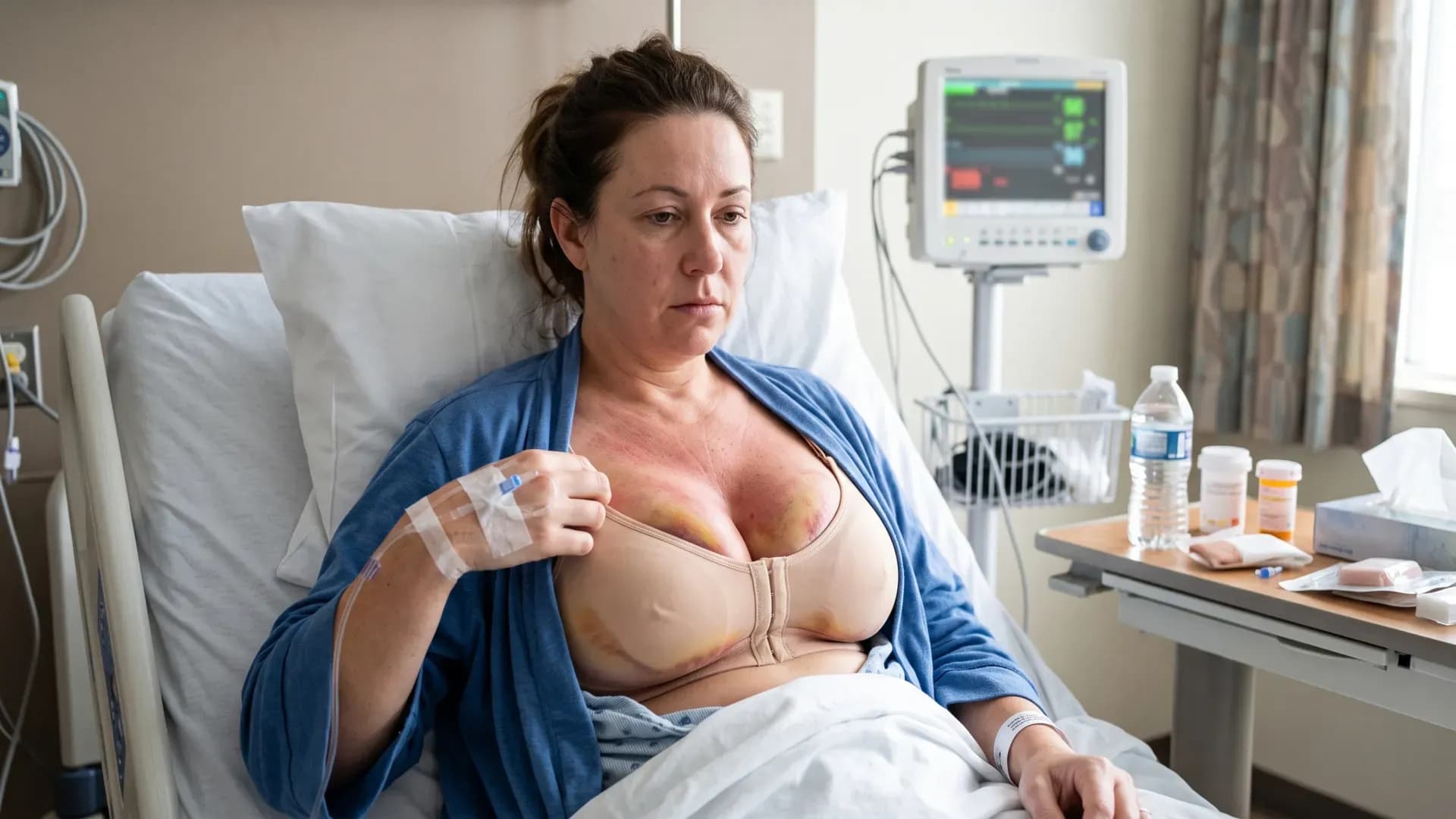
Swelling is significant during these days. The nose, eyelids, and part of the cheeks may swell noticeably. This is completely normal and is part of the healing process. Some patients also develop bruising around the eyes, which is equally normal and resolves within one to two weeks.
Nasal congestion is perhaps what causes the most discomfort. The nasal packing or internal swelling makes breathing through the nose difficult for several days. That forced mouth breathing tends to cause dryness and interrupted sleep. According to MedlinePlus from the U.S. National Library of Medicine, this postoperative nasal congestion is a normal response of the nasal tissue and resolves progressively over the first few weeks. Many patients tell me this is the most uncomfortable part of recovery, more so than pain itself.
Pain as such during these first days is manageable with conventional analgesics in the vast majority of cases. Patients with lower pain thresholds may require stronger medication, but that is anticipated before the surgery and planned for by the medical team.
The first week after rhinoplasty: removal of the splint and stitches
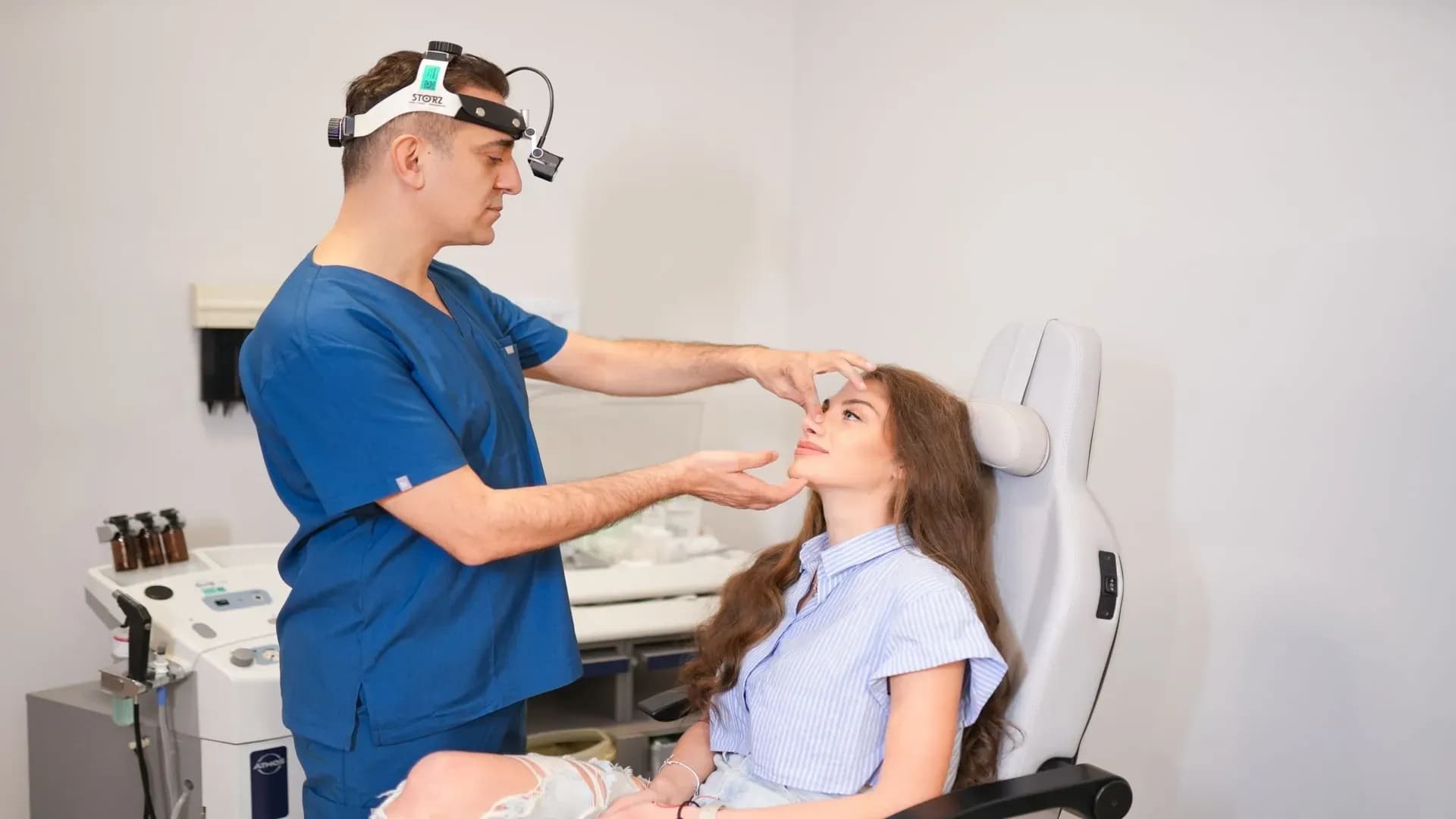
Around day seven, the external splint that protects the nose during the first week of healing is typically removed. This is a moment many patients approach with some anxiety. The removal itself is not painful, though there may be some mild sensitivity.
Sutures, if present, are also removed at this first follow-up visit. This produces a brief sensation of tugging, but it is not a painful procedure.
The following weeks
After the first week, most patients notice a significant improvement in terms of comfort. Swelling begins to reduce gradually. Breathing improves. The sensation of pressure decreases.
What may persist for longer is a feeling of numbness at the tip of the nose. This occurs because some small nerve branches are affected during surgery and take weeks or months to recover fully. It is a normal and temporary phenomenon.
What if the pain after the rhinoplasty is severe?
If at any point during recovery the pain becomes very intense or increases rather than decreases, that is a signal to contact your surgeon immediately. Severe or increasing pain is not a normal part of postoperative recovery and may indicate a complication that requires evaluation. If you want to understand in advance what complications can arise and which warning signs to watch for, this article on rhinoplasty risks and complications covers all of that in detail.
This is why it is essential to know clearly, before surgery, how to reach your medical team and who to contact if something does not feel right.
If you are considering rhinoplasty and want to talk through the process in detail with a specialist, through Kurbuo you can schedule a virtual medical consultation with rhinoplasty surgeons. That initial conversation lets you resolve all your questions before making any decisions.