TLDR: Ethnic rhinoplasty is nasal surgery designed to make changes that respect and preserve the distinctive features of a patient's cultural heritage. It does not aim to impose a single beauty standard, but to improve the nose within the parameters that are natural to the patient. It requires a specialist with specific training because anatomical characteristics vary significantly across different ethnic groups, and those differences fundamentally affect the surgical technique.
When a patient tells me "I want rhinoplasty but I don't want to end up with a nose that looks operated on," what they are often expressing is something very precise: they want to improve something that bothers them, without losing the features that make them who they are. That is exactly what ethnic rhinoplasty is about.
Why ethnic rhinoplasty exists as its own category
For many years, nasal surgery operated under a predominantly Western standard of reference. The results displayed in textbooks and the surgical objectives were oriented toward a nasal structure with specific proportions and characteristics. That framework did not account for the fact that the nose of a person of Latin American, African, Asian, or Middle Eastern heritage has its own characteristics that are valid and part of that person's identity.
The result of applying techniques designed for a different anatomical type can be a nose that does not harmonize with the rest of the face. It can look artificial. And more importantly, it can generate deep dissatisfaction because the outcome does not resemble what the patient imagined.
Ethnic rhinoplasty emerged in response to that problem. It is a field that recognizes anatomical diversity and incorporates it as a central element of surgical planning.
Ethnic Rhinoplasty Examples


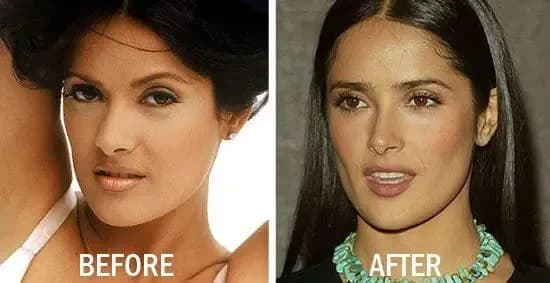
The anatomical differences that matter in a Rhinoplasty
To understand why an ethnic rhinoplasty requires specialized knowledge, you need to understand how nasal anatomy varies with a patient's heritage.
Skin thickness is one of the most important factors. People of Latin American, African, or Southeast Asian heritage tend to have thicker nasal skin with more sebaceous glands. That means the skin responds differently to tip definition techniques. The American Society of Plastic Surgeons documents that in patients with thicker nasal skin, the choice of surgical approach and soft tissue management techniques are decisive factors in achieving the intended outcome. A surgeon who does not understand this difference may modify the cartilage expecting a degree of definition that the skin will not allow, or may thin the skin inappropriately, generating complications.
Cartilage resilience and flexibility also varies. In many Latin American patients and those of other heritages, the nasal cartilages have a different elasticity than what classical techniques were designed around. That changes how the nasal framework is handled during surgery.
The width of the nasal base, tip projection, bridge height, and nasolabial angle all have different proportions depending on the patient's ethnic background. A surgeon specialized in ethnic rhinoplasty knows how to evaluate those proportions within the context of the patient's complete face, not in comparison to an external standard.
What can change and what deserves to be preserved during an ethnic rhinoplasty
This is perhaps the most important point in any conversation about ethnic rhinoplasty. When a patient comes to consultation, I always ask two questions: what bothers you, and what do you want to keep? Both questions are equally important.
Someone might want to reduce the width of the nasal base while keeping the rounded tip they have. Someone else might want to refine the bridge without losing the characteristic profile of their nose. Another person might want more definition without the result looking like it belongs to someone else's face.
Ethnic rhinoplasty done well achieves those changes while preserving what makes the nose coherent with the patient's identity. There is no "correct" result in absolute terms. The correct result is the one the patient feels represents them.
Why you need a specialist with ethnic rhinoplastic experience
Not all surgeons who perform rhinoplasty have the same training or experience in ethnic nasal surgery. This is a field that requires specific knowledge of diverse anatomy, experience with different skin and cartilage types, and a philosophy of practice that places the patient's identity at the center.
Before choosing your surgeon, ask directly about their experience with patients of your cultural heritage. Ask to see results from cases similar to yours. Ask which techniques they use and why. Understanding whether the specialist plans to use an open or closed approach, and why, should also be part of that conversation. You can read about the differences between both approaches in this article on open vs. closed rhinoplasty. According to MedlinePlus from the U.S. National Library of Medicine, selecting the right surgeon and being well-prepared for the procedure are among the factors that most influence the outcome of a rhinoplasty. A surgeon with real experience in ethnic rhinoplasty will answer those questions with confidence and detail.
Through Kurbuo, you can connect with specialists who have documented experience in ethnic nasal surgery. The initial virtual consultation allows you to have that conversation directly with the surgeon, from wherever you are, before making any commitment.