TLDR: There are four main types of rhinoplasty: open, closed, ethnic, and revision. Each one addresses different needs and is chosen based on the patient's nasal structure, the changes they want to achieve, and the surgeon's clinical judgment. No single type is universally superior. What matters is that the chosen procedure fits your specific anatomy and goals, and only a qualified specialist can determine that after a proper evaluation.
As a surgeon who has spent years working on nasal procedures, I can tell you that the question "what type of rhinoplasty would I need?" is one I hear in almost every consultation. And that question, simple as it sounds, opens a conversation that can last an hour.
The reason is straightforward: the nose is not a single uniform structure. It is a three-dimensional framework composed of bone, cartilage, skin, and soft tissue. Every person has a different nasal architecture, and that architecture determines which type of procedure is most appropriate. I want to explain, in the same way I would during a consultation, what each type of rhinoplasty involves and what it means for you as a patient.
Open rhinoplasty
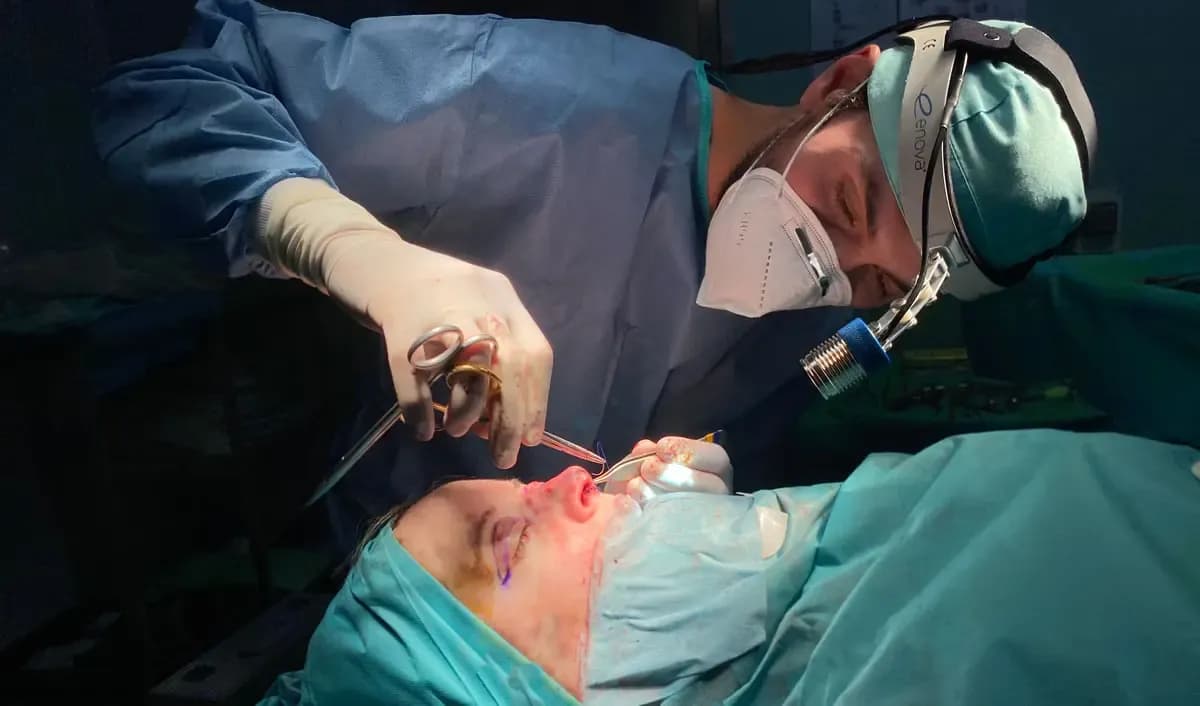
In open rhinoplasty, the surgeon makes a small incision on the columella, which is the narrow strip of skin between the two nostrils. This incision allows the surgeon to lift the nasal skin and work on the internal structures with a direct, complete view of everything underneath.
When patients hear "external incision," they immediately worry about scarring. That concern is understandable and I want to be straightforward with you: there will be a small scar at the base of the nose. However, in the hands of an experienced surgeon and with proper postoperative care, that scar becomes virtually undetectable within a few months. It is located in an area of very little tension and almost always heals excellently.
Open rhinoplasty is indicated when significant modifications are needed: cases of severe septal deviation, substantial reduction or augmentation of the nasal bridge, correction of marked tip asymmetry, or situations where the surgeon needs broad exposure to work with precision.
Closed rhinoplasty
In closed rhinoplasty, all incisions are made inside the nostrils. There are no external scars. The surgeon works through those internal access points to modify the bones and cartilage.
This approach is appropriate for cases where the desired changes are more specific and do not require broad exposure of the nasal framework. It generally results in less initial swelling and a somewhat shorter recovery timeline.
What I want you to take away from this: the choice between open and closed does not depend on which is "better" in absolute terms, but on what your nose specifically needs. A surgeon who recommends one over the other without having evaluated your anatomy in detail is giving you an incomplete answer.
Ethnic rhinoplasty
Ethnic rhinoplasty deserves its own space because it represents a distinct philosophy of intervention. It is not simply about operating on the nose of a person from a particular cultural background. It is about making changes that respect and preserve the features that are part of the patient's identity.
Historically, nasal surgery had a tendency to impose a single aesthetic standard. We now know that approach is neither correct nor desirable. The nose of a person of Latin American, African, Asian, or Middle Eastern heritage has particular characteristics in terms of skin thickness, cartilage firmness, tip projection, and base width. Operating without accounting for those characteristics produces results that can look artificial or that do not harmonize with the rest of the face.
A specialist in ethnic rhinoplasty understands those differences. They know that thicker skin requires specific techniques to achieve tip definition. They know that modifying the nasal bridge in a person of a given heritage can alter the harmony of their entire profile. And they work to enhance what the patient already has, not to erase it.
Revision rhinoplasty
Revision rhinoplasty is performed when a previous procedure did not produce the expected result or generated complications that need to be corrected. Technically speaking, it is the most complex of all. The American Society of Plastic Surgeons classifies revision rhinoplasty as a procedure that demands a significantly higher level of surgical planning than a primary rhinoplasty, precisely because previously operated tissue changes the working conditions in ways that are difficult to predict.
After a rhinoplasty, the scar tissue that forms changes the architecture of the nose. The surgical planes are less defined. Available cartilage may be limited. All of this requires the surgeon to work with greater care and, in some cases, to use cartilage grafts taken from other areas of the body such as the ears or ribs.
If you are considering revision rhinoplasty, there is something important I want you to know: the time between the first surgery and the revision matters greatly. The nose needs sufficient time for swelling to resolve completely and for the tissue to mature. According to the Mayo Clinic, most specialists recommend waiting at least one full year before evaluating whether a revision is necessary, and in many cases that waiting period extends to two years.
Which type is right for you?
That question can only be answered after a detailed clinical evaluation. In that evaluation, the surgeon analyzes your nasal anatomy, listens to your goals, reviews your medical history, and if necessary, requests imaging studies. From there, they can tell you clearly which type of rhinoplasty suits you and why. Before that consultation, it is also worth understanding the risks and possible complications of the procedure, so that the conversation with your surgeon can be as complete as possible.
Through Kurbuo, you can connect with rhinoplasty specialists who conduct that evaluation virtually, from wherever you are. It is the first step toward making an informed decision, without committing to anything before you have the information you need.