Can you watch television after cataract surgery? Here’s what ophthalmologists say
Yes, you can watch television after cataract surgery, even on the day of the procedure. The important thing is to do so in moderation during the first 24 to 72 hours, in short sessions of 15 to 30 minutes, and to take the breaks recommended by your ophthalmologist.
If you have just had surgery or your operation is coming up, it is natural to wonder what you can and cannot do in the first few days. In this guide, produced in collaboration with the ophthalmology team at Clínica Santa Lucía, we explain when it is safe to watch television, how to use screens without affecting your recovery, and which warning signs you should never ignore.
What happens to your vision after cataract surgery?
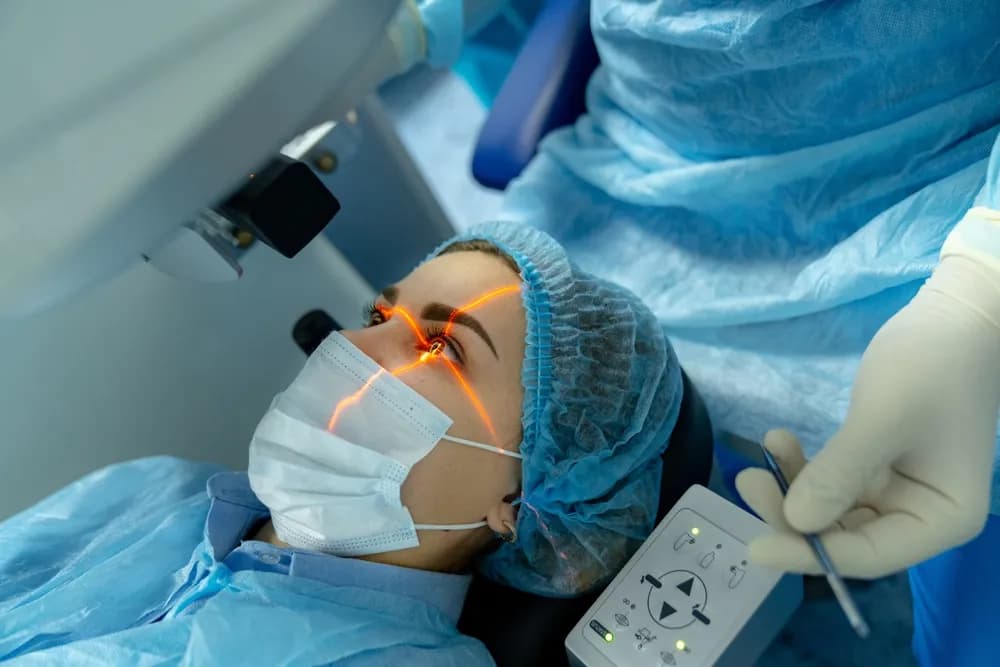
Cataract surgery is an outpatient procedure in which the ophthalmologist replaces the cloudy lens with an intraocular lens (IOL). It is one of the most commonly performed and safest surgical procedures in the world, with success rates exceeding 95%, but the eye needs time to adjust.
During the first few hours and days, it is completely normal to experience:
- Blurred or fluctuating vision
- A sensation of grit or a foreign body in the eye
- Increased sensitivity to light (photophobia)
- Mild tearing
- Halos or flashes around lights, especially at night
These symptoms usually improve gradually as the eye heals and adapts to the new lens. Clear, stable vision is generally achieved between 2 and 4 weeks after the procedure.
So, can you watch television after a cataract operation?
Yes, you can watch television. Looking at screens does not damage the intraocular lens or interfere with the healing of the eye. What can affect your comfort, however, is prolonged visual strain, which can lead to eye strain, dry eyes and a feeling of tiredness.
Think of it this way: your eye has just undergone surgery. Although the tissue is healing very well on the inside, on the outside it needs rest, just like any part of the body that has undergone surgery.
Recommended timeline for watching television after surgery
Time
Recommendation
Day 0 (day of surgery)
Rest your eyes. If you do watch TV, limit yourself to a maximum of 10–15 minutes in well-lit conditions.
Days 1 to 3
Short sessions of 15 to 30 minutes, with breaks every 20 minutes.
First week
Moderate use, avoiding marathons or long continuous sessions.
Second week
Almost normal use, always listening to your eye’s signals.
From the third week onwards
Normal use as assessed by your ophthalmologist.
⚠️ This timeline is a guide. Every patient recovers at a different pace and your specialist will tell you the exact time when you can resume each activity.
Recommendations for watching television safely after surgery
Following these simple care instructions makes all the difference between a comfortable recovery and one involving unnecessary discomfort:
- Start with short sessions: no more than 15 to 30 minutes at the beginning.
- Follow the 20-20-20 rule: every 20 minutes, look at an object 6 metres (20 feet) away for 20 seconds.
- Maintain a suitable distance: sit at least 2.5 metres away from the screen.
- Ensure good lighting: the room should be well lit; avoid watching television in the dark so as not to strain your eyes.
- Avoid direct glare from lamps or windows on the screen.
- Blink consciously. When looking at screens, we blink up to 60% less, which dries out the eyes.
- Use the eye drops recommended by your optician, especially artificial tears if you feel dryness.
- If you feel discomfort, take a break. Your eyes are telling you to take a break.
Can I use a mobile phone or computer, or read, after having cataract surgery?
Yes, they are allowed too, but the same principle applies: moderation and taking breaks. In fact, small screens (mobile phones, tablets) tend to require more effort than the television because:
- They sit closer to the eye.
- They help you focus better and reduce blinking.
- They tend to be brighter in dimly lit environments (for example, in bed).
Specific care instructions for mobile phones and computers:
- Adjust the brightness to suit the lighting in the room.
- Increase the text size for the first few days to avoid straining your eyes.
- Turn on the blue light filter or night mode, especially at the end of the day.
- Avoid using your mobile phone in bed with the lights off.
- For reading a physical book: ensure there is good overhead lighting and take a break every 20–30 minutes.Actividades que sí debes evitar en los primeros días
Although watching television and using screens in moderation is permitted, there are certain activities that could hinder your recovery and should be avoided during the first 2 to 4 weeks:
- ❌ Rubbing or pressing on your eyes.
- ❌ Lifting heavy objects (over 5 kg) or engaging in strenuous physical activity.
- ❌ Playing contact or high-impact sports.
- ❌ Exposing yourself to the sun without UV-protective sunglasses.
- ❌ Staying in environments with dust, smoke or strong winds.
- ❌ Swimming in pools, hot tubs, rivers or the sea.
- ❌ Applying eye make-up (for at least 2 weeks).
- ❌ Sleeping on the side of the operated eye during the first few days.
- ❌ Stopping the prescribed eye drops without consulting your doctor.Señales de alerta: ¿cuándo consultar al oftalmólogo de inmediato?
Although complications are rare, there are certain signs that should never be ignored. Contact your specialist or go to A&E if you experience:
- 🚨Severe or persistent pain that does not subside with painkillers.
- 🚨 Sudden loss of vision in the operated eye.
- 🚨 Marked redness, or redness that worsens rather than improves.
- 🚨 Purulent or profuse discharge.
- 🚨 Vision with intense flashes of light or new floating shadows.
- 🚨 Fever accompanied by eye discomfort.
- 🚨 Vision that worsens rather than improves over time.
Acting quickly if you experience any of these symptoms is key to protecting your vision.
Frequently asked questions about recovery after cataract surgery
How long should I rest my eyes after cataract surgery?
Most patients only need to rest their eyes strictly for the first 24 hours. From the second day onwards, they can resume moderate screen-based activities, taking regular breaks.
When can I watch television without restrictions after cataract surgery?
Generally after the first or second week, depending on your individual progress and your ophthalmologist’s assessment during post-operative check-ups.
Is it normal for my eyes to tire quickly at first?
Yes, it is completely normal during the first few days. The eye is adapting to the intraocular lens and a new way of focusing. Eye strain decreases as the weeks go by.
Why do I see halos or flashes around lights?
It is normal to see halos, flashes or experience increased sensitivity to light during the first few days or weeks, especially at night. These symptoms usually subside as the brain and eye adapt to the new intraocular lens.¿Ver televisión en 3D o usar realidad virtual daña la cirugía?
The surgery itself is not harmful, but both formats place a much greater strain on the eyes. It is recommended that you avoid them for at least the first month.
Can I watch television whilst wearing the eye patch?
Yes. The patch only covers the operated eye, and there is no problem with watching television with the unoperated eye during the first few hours.
When can I drive again after cataract surgery?
On average, between 24 and 72 hours, provided your vision is stable and your ophthalmologist gives the go-ahead. Do not drive without this authorisation.
Can I watch television if I’ve had cataract surgery with multifocal lenses?
Yes, with the same general recommendations. Multifocal lenses require a neuroadaptation period of several weeks, during which halos and night vision may be more noticeable. Over time, the brain learns to interpret the different focal lengths of the lens.
Your recovery is just as important as the surgery
A successful cataract operation is only half the story: the post-operative period determines the quality of vision you will maintain for years to come. It is essential to follow your ophthalmologist’s instructions, take regular breaks to rest your eyes and attend your scheduled check-ups.
At Clínica Santa Lucía, we have ophthalmologists specialising in cataract surgery who will support you before, during and after the procedure. Our team will clearly explain which activities you can resume, when to do so and how to protect your vision in the long term.
👁️ Book your consultation with our specialists
If you have symptoms of cataracts or have already had surgery and would like a check-up, our team is ready to assist you.
📞 Book your appointment here| Contact us via WhatsApp
Content reviewed by the ophthalmology team at Clínica Santa Lucía. This article is for informational purposes only and is not a substitute for a face-to-face medical consultation. If you have any symptoms, please see a qualified ophthalmologist.