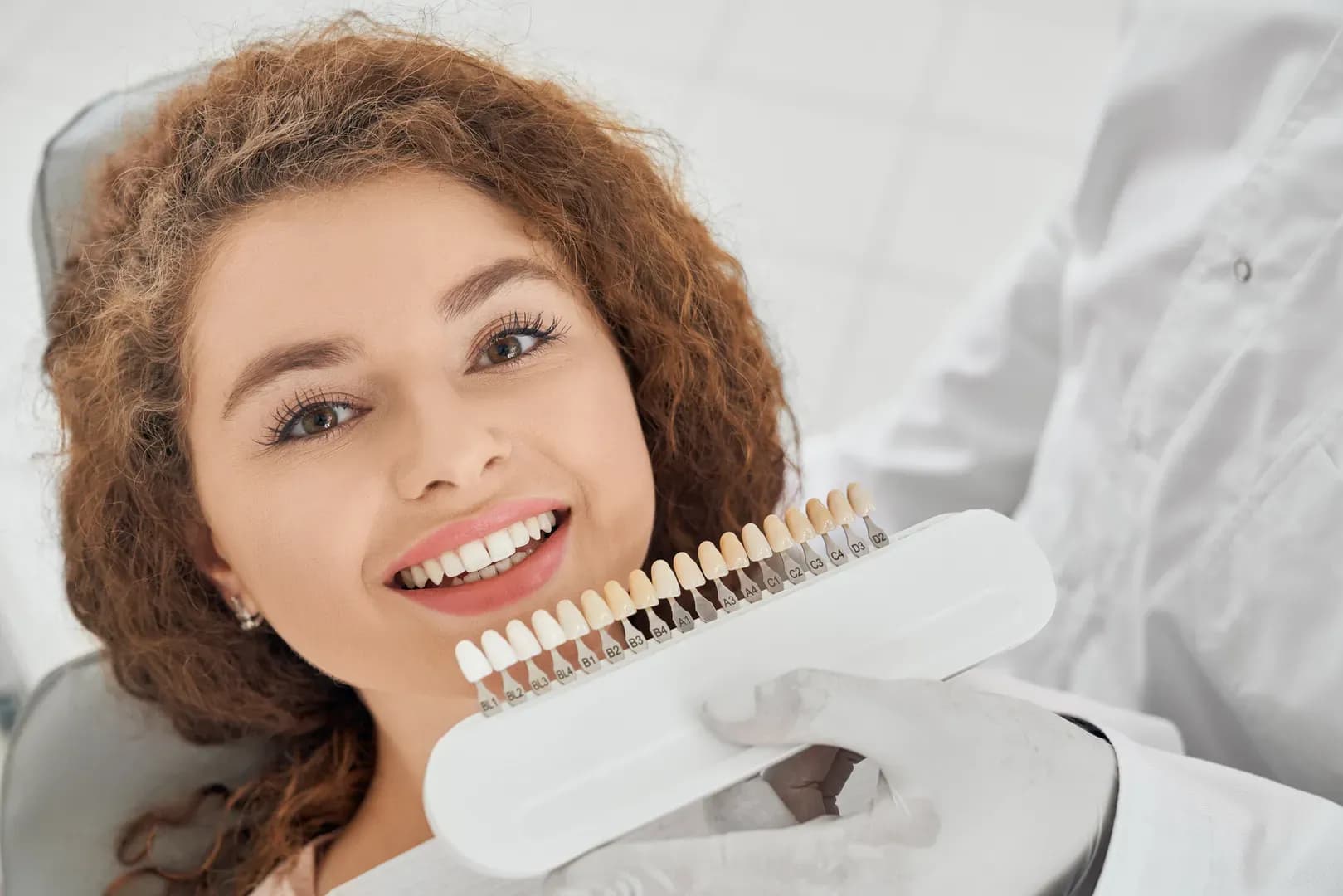
The direct clinical answer is: it depends on the amount of remaining tooth structure and the biomechanical demands placed on the tooth. A dental veneer is indicated when the tooth structure is largely intact and the primary goal is a minimally invasive aesthetic or morphological correction, whereas a full-coverage zirconia crown is reserved for teeth with severe structural breakdown or where complete cuspal coverage is required to prevent catastrophic failure.
A hot cup of coffee in the morning, an unexpected bite, or simply looking in the mirror over time: you notice a chipped edge, a tooth noticeably darker than the rest, or wear that makes you hesitate before smiling for a photo. That aesthetic concern is quickly met with a very common clinical dilemma: "Should I get a crown, or is a veneer enough?"
Online searches are filled with generic material catalogs, superficial price comparisons, and prefabricated promises. However, restorative dentistry is not a shopping catalog; it is an act of clinical diagnosis. This guide provides the biomechanical criteria that determine which treatment your tooth actually needs, why the guiding principle must always be the preservation of natural tooth structure, and how digital planning removes guesswork before touching a tooth.
What Is a Zirconia Crown?
A dental crown is an indirect, full-coverage prosthetic restoration that covers the entire coronal surface (360 degrees) of a prepared tooth. Its primary indication is not routine aesthetics, but biomechanics: protecting and restoring anatomy to teeth with substantial coronal loss where partial bonded restorations, such as veneers or inlays/onlays, cannot offer a predictable long-term prognosis against masticatory forces.
A High-Performance, Tooth-Colored Ceramic
Polycrystalline zirconium dioxide is a biocompatible, high-performance technical ceramic. Structurally, it features a phase-transformation toughening mechanism that grants it remarkable fracture toughness and flexural strength, significantly surpassing traditional feldspathic or glass-ceramics. While no intraoral biomaterial is completely indestructible under extreme stress or uncontrolled parafunctional habits, zirconia provides exceptional long-term mechanical stability.
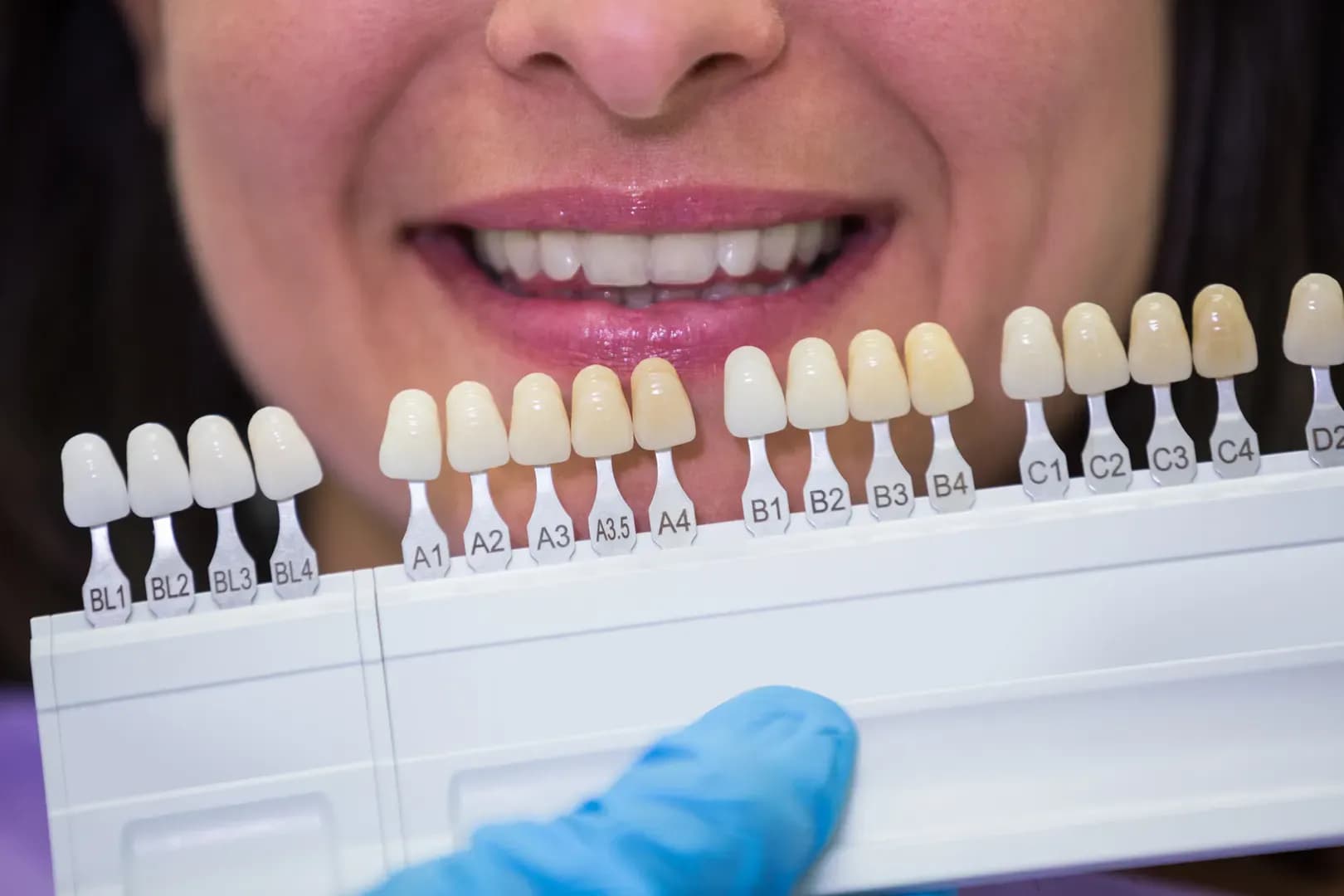
In its modern multi-layered and high-translucency formulations, zirconia replicates shade gradation, surface texture, and light transmission comparable to natural dental enamel. Multiple independent clinical studies confirm its clinical survival rate, as documented in the systematic review onmonolithic CAD/CAM zirconia restorations.
Zirconia vs. Porcelain-Fused-to-Metal (PFM)
For decades, fixed prosthodontics relied heavily on porcelain-fused-to-metal (PFM) restorations, consisting of a cast metal substructure veneered with feldspathic porcelain. While functionally proven, they present well-documented limitations compared to all-ceramic alternatives:
- Gingival margins and aesthetics: As gingival tissues naturally remodel over time, the basal metal margin often becomes exposed, leaving an unnatural dark shadow or grey line along the gumline.
- Tissue integration: Zirconia exhibits excellent biocompatibility, promoting a favorable soft-tissue response and minimal bacterial plaque adhesion adjacent to the gingival sulcus.
- Optical properties: Metal copings completely block light transmission, requiring opaque masking layers that can leave restorations looking flat or unnatural; monolithic zirconia allows lifelike light transmission.
When It Is Indicated (and When It Is Not)
The clinical indication for a zirconia crown relies on an individualized evaluation of remaining tooth structure, axial wall height, and ferrule effect:
- Teeth with extensive cuspal fractures or severe coronal loss compromising structural rigidity where a partial bonded restoration is contraindicated.
- Teeth with failing, oversized restorations and recurrent decay where remaining perimeter walls cannot support partial bonding.
- Definite prosthetic restorations serving as single-unit crowns over endosseous dental implants.
Conversely, it is not indicated for structurally sound teeth exhibiting minor surface discoloration, mild crowding, or general cosmetic dissatisfaction. In those scenarios, circumferential reduction of healthy tooth structure constitutes unnecessary overtreatment and violates modern bioethical standards of minimal intervention.
What About a Dental Veneer? Key Clinical Distinctions
When the primary objective involves the anterior aesthetic zone and the tooth's biomechanical integrity remains sound, the clinical evaluation focuses onchoosing between a zirconia crown or a veneer.
Surface Coverage: Full Tooth vs. Facial Surface
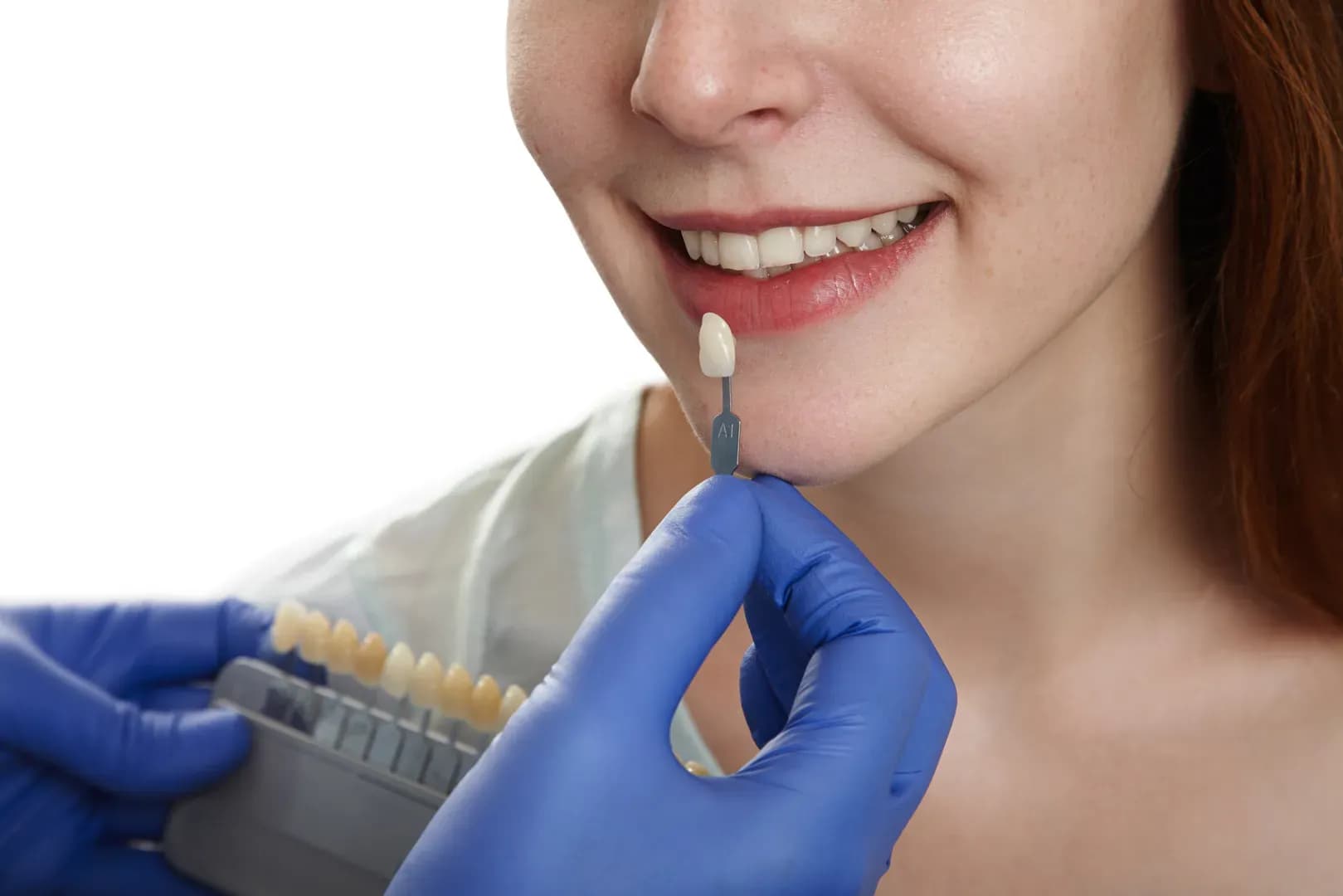
While a crown encompasses the tooth in its entirety, a veneer is an ultra-thin ceramic or composite restoration bonded exclusively to the facial (vestibular) surface and, depending on the design, the incisal edge and proximal contact areas. It restores optical harmony, shape, and alignment without altering lingual or palatal tooth structure when those surfaces are intact and healthy.
Preservation of Natural Tooth Structure
Substrate conservation represents the most significant clinical difference between both approaches:
- Veneers: Governed by minimally invasive preparation protocols confined primarily within dental enamel, typically requiring 0.3 mm to 0.7 mm of calibrated reduction (or prep-less protocols in select clinical cases), maximizing reliable enamel-resin adhesion.
- Crowns: Require perimeter axial and occlusal reduction ranging between 0.8 mm and 1.5 mm depending on whether monolithic or layered zirconia is utilized, requiring greater reduction of tooth structure to establish a path of insertion and adequate structural clearance.
Types of Veneers and Clinical Applications
Different aesthetic modalities exist depending on functional demands and clinical indication:
- Ceramic veneers (Lithium Disilicate or Feldspathic): Recognized for outstanding optical fidelity, color stability, biocompatibility, and wear resistance. You can learn more about clinical considerations and planning in this guide ondental veneers in the Dominican Republic.
- Direct composite resin veneers: Layered and sculpted directly onto the tooth structure in-office, offering a conservative, repairable option for targeted aesthetic adjustments, requiring routine repolishing over time to preserve surface gloss.
How the Specialist Decides: Conservation First
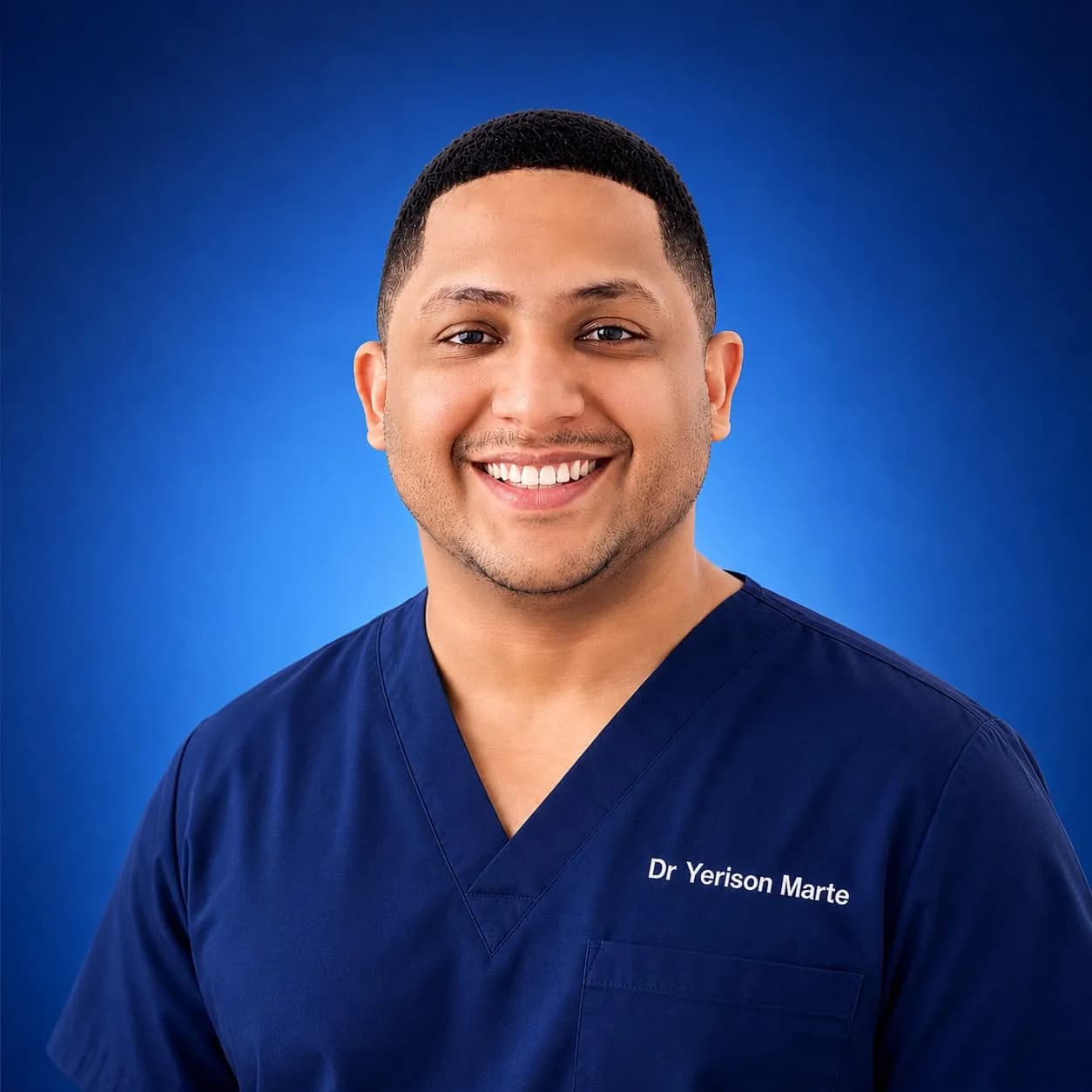
In evidence-based dentistry, materials do not make treatment decisions; clinical diagnostics do. Under the clinical philosophy ofDr. Yerison Marte, endodontist, the baseline priority is exhausting all conservative avenues to preserve pulp vitality and natural root structure before electing extensive preparation or artificial replacement.
The Diagnostic Phase: Radiography, Clinical Exam, and Root Health
Before recommending either a crown or a veneer, the specialist assesses three essential variables:
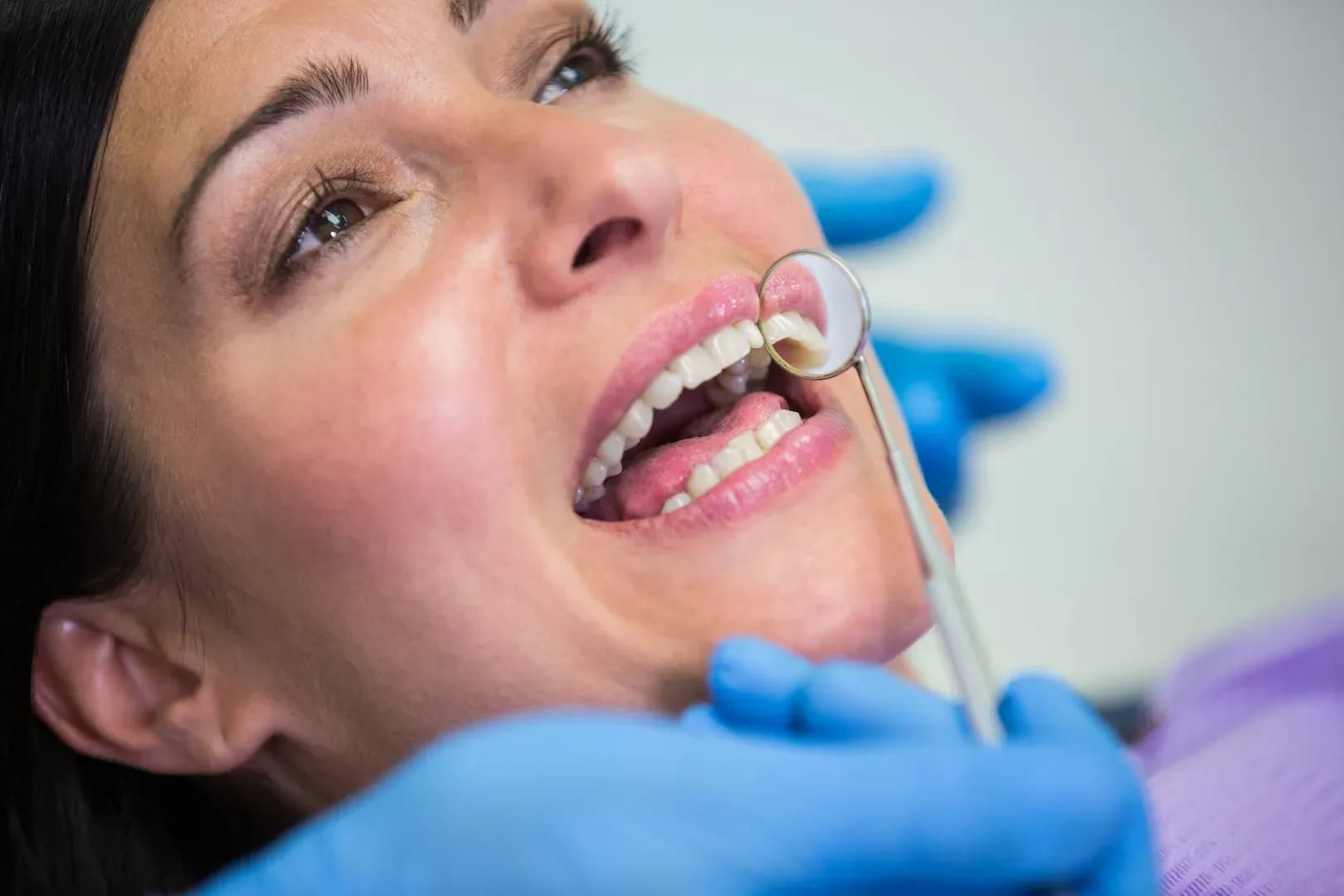
- Periodontal and radicular support: Periapical radiographs or cone-beam computed tomography (CBCT) to confirm the absence of vertical root fractures, active periapical lesions, or advanced periodontal bone loss.
- Occlusal dynamics and parafunction: Evaluating anterior guidance, chewing patterns, and bruxism. Placing an aesthetic restoration without diagnosing occlusal interferences often results in premature biomechanical failure.
- Available bonding substrate: Predictable adhesion requires substantial healthy enamel. If the remaining substrate consists predominantly of deep dentin or lacks adequate ferrule, full coronal coverage becomes the predictable long-term approach.
When Root Canal Treatment Is Indicated Prior to Restoration
Endodontic therapy is never a routine preliminary step for placing a crown; it is performed strictly under definitive pulpal diagnoses, such as irreversible pulpitis, pulpal necrosis, or chronic apical periodontitis. Under these circumstances, saving the biological foundation requiresroot canal treatment to preserve the natural tooth.
It is a common misconception that root canal-treated teeth become excessively brittle solely due to internal moisture loss. Scientific evidence indicates that reduced tooth resistance stems primarily from the loss of coronal structural integrity, such as missing marginal ridges, extensive access preparations, or extensive prior caries. Therefore, not all endodontically treated teeth require full crowns:
- Anterior teeth with intact marginal ridges and conservative endodontic access cavities are routinely restored with direct adhesive restorations.
- Premolars and molars with missing marginal ridges require cuspal protection (such as partial onlays/overlays or full-coverage crowns) to distribute occlusal stresses evenly. Modern local anesthesia and microsurgical techniques make it possible torestore a tooth without fear or pain.
Crown on Implant: When the Natural Tooth Cannot Be Preserved
When a tooth presents an untreatable vertical root fracture, non-restorable subcrestal caries, or severe root resorption, extraction becomes unavoidable to prevent progressive bone destruction. At this stage, restorative planning shifts to prosthetic replacement:
- A biocompatible titanium implant is surgically placed into the bone, adhering to the protocols outlined inhow dental implants are placed.
- A customized zirconia crown is designed and retained (screw-retained or cement-retained) over the implant abutment, recovering masticatory efficiency and natural aesthetics. For procedural details, explore the factors influencingdental implants in the Dominican Republic.
Digital Planning: Previewing Your Smile Before Beginning
Comprehensive cosmetic and restorative rehabilitation requires objective planning. Modern digital protocols eliminate guesswork through the implementation ofdigital smile design: what it is and how it works.
Intraoral Scanning and CAD/CAM Technology
At YM Dental Clinic, high-precision 3D intraoral scanners capture accurate digital impressions of dental arches without conventional impression pastes. These digital records are integrated with facial photographs and sent to a specialized dental laboratory utilizing CAD/CAM technology (Computer-Aided Design and Computer-Aided Manufacturing) to design and mill definitive restorations with high marginal precision.
Evaluating the Mock-Up
Through a diagnostic aesthetic trial (guided intraoral mock-up), patients can evaluate a temporary resin replica directly over their teeth before any definitive preparation occurs. This phase allows the clinician and patient to test phonetics, inspect lip dynamics, evaluate tooth proportions, and make personalized adjustments collaboratively.
Maintenance and Longevity: Realistic Expectations
No restorative dental treatment should be considered permanent. Although zirconium dioxide displays high clinical success rates—as analyzed in scientific reviews on theclinical performance and failure modes of zirconia-based restorations—the biological lifespan of any restoration depends directly on oral maintenance:
- Marginal periodontal health: Rigorous interproximal flossing and brushing prevent marginal gingival inflammation and recurrent root caries at the restoration margin.
- Management of parafunctional habits: Severe bruxism exerts heavy non-axial forces that can lead to micro-leakage, screw loosening, or chipping of opposing teeth if an occlusal night guard is not worn consistently.
- Regular clinical monitoring: Semiannual professional dental checkups and cleanings ensure the integrity of the marginal seal and underlying bone levels over time.
International Patients: Starting with a Virtual Consultation
For patients residing in the United States, Puerto Rico, the Caribbean islands, or across the country, organizing restorative care can be coordinated throughdentistry services via KURBUO:
- Preliminary video consultation: An opportunity to discuss dental concerns, aesthetic goals, and medical history.
- Remote review of diagnostic records: Clinical assessment of recent panoramic radiographs, periapical films, or CBCT scans.
- Written preliminary outline and initial estimate: A tentative procedural sequence outlining estimated phases and clinical timelines.
If you are organizing your travel to Santo Domingo, thedental tourism guide to the Dominican Republiccovers logistical insights to help schedule yourrestorative treatments during your dental tripwith clarity and preparation.
Frequently Asked Questions
How many years does a zirconia crown last?
Zirconia demonstrates exceptional chemical and mechanical stability within the oral cavity. Its functional lifespan depends on oral hygiene, bruxism management, supportive enamel, and regular periodontal checkups; with proper care, it offers documented high long-term survival rates.
Which is better: lithium disilicate or zirconia?
Neither material is universally superior; selection depends on functional demands and location. Lithium disilicate provides excellent adhesive properties and translucency, making it an ideal choice for anterior veneers and partial inlays. Zirconia offers higher flexural strength and fracture resistance, making it suitable for posterior full crowns, bridges, and implant restorations.
Can a crown be placed without shaving down the tooth?
No. A full-coverage crown requires circumferential and occlusal preparation to accommodate material thickness and maintain a biocompatible emergence profile along the gumline. When healthy tooth structure remains intact, conservative restorative approaches (such as veneers, inlays, or overlays) should be selected instead of full crowns.
Does a root canal-treated tooth always need a crown?
Not necessarily. The decision depends on the volume of remaining coronal structure and tooth position. Anterior teeth with intact marginal ridges can frequently be restored using direct resin techniques. Posterior teeth with substantial cuspal destruction require indirect cuspal coverage (partial overlays or full crowns) to prevent structural fracture.
Take the Next Step: Schedule Your Consultation with Dr. Marte
Long-lasting restorative results rely on careful diagnostics, digital precision, and respect for biological tissue. You can evaluate your options forzirconia crowns with Dr. Yerison Marteand access comprehensive care forcrowns and veneers at YM Dental Clinic, located at Uptown Plaza, Santo Domingo.
To receive personalized guidance and explorehow to overcome dental anxiety, book your evaluation through KURBUO to begin with a clear, evidence-based plan tailored to your smile.